What technologies are driving next-generation Ship Unloaders design?
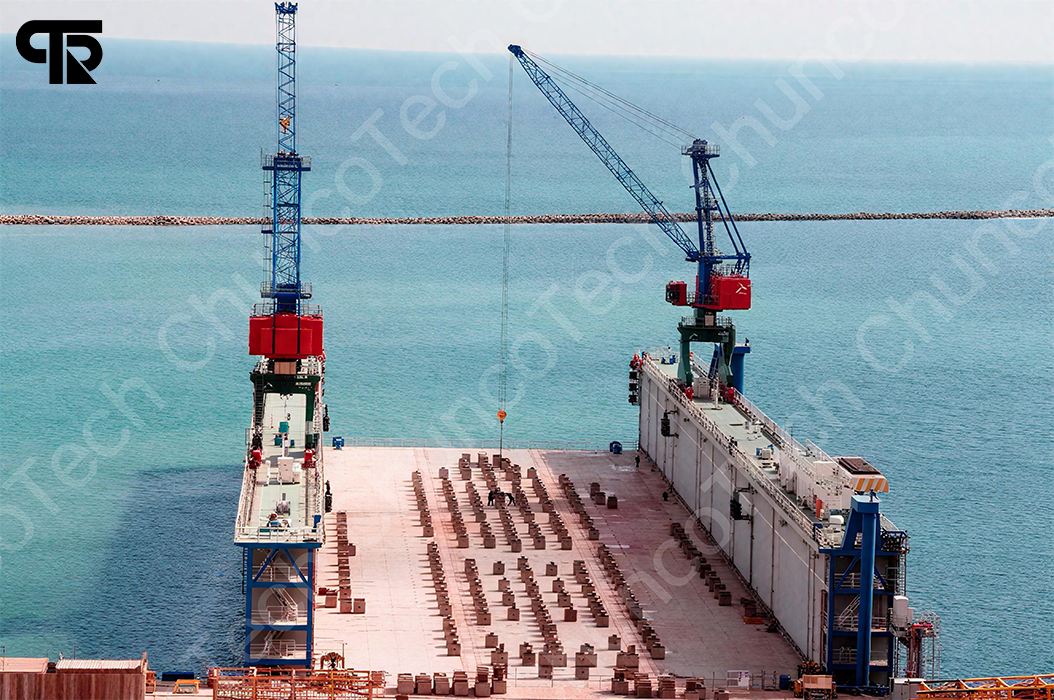
Settling on a hoist, the option often equals knuckle boom versus extendable boom. Constant booms deliver user-friendliness and are perfect for plumb lifts, but knuckle booms grant amplified maneuverability, allowing access to tight spaces. Deliberate on the task environment; if you’re chiefly facing constraints or require more involved positioning, a folding jib is expectedly the better option. However, for unobstructed areas and straightforward lifts, a fixed arm might result in a more budget-friendly alternative.
Appreciating Resilient Lifting Boom Cranes: Applications and Advantages
Heavy-Duty crane arm hoists represent a custom type of lifting up equipment, fashioned for considerable load processing in laborious locales. Their core characteristic is a rigid boom construction, which allows for precise positioning and superior stability, especially when operating in compact spaces or at notable heights. Common engagements subsume bridge formation, commercial initiatives, gust plantation deployment, and structural advancement. The principal upsides include increased safety, strengthened proficiency, and the facility to carry out tasks that might be unachievable with conventional installations. This converts to diminished outlays and better mission returns.
Ship-to-Shore Gantry: The Giants of Quay Container Distribution
Present-day colossal STS elevators represent the max of engineering feat in the maritime industry. Designed to speedily load and offload containers between ships and the harbor, they are important for the uninterrupted operation of modern ports. Their dimension – often exceeding a hundred feet – and extraordinary capability allow them to handle the biggest container freighters currently in deployment, fundamentally shaping global transactions.
Knuckle Boom Cranes: Multifunctionality in Lifting Jobs
Knuckle boom lifters are recognized for their exceptional elasticity, providing handlers with a unique advantage in multiple transporting functions. Featuring a jointed boom segment, these durable machines can cover around impediments and set materials in minuscule spaces. This trait makes them ideal for purposes in production, distribution, supplies projects, and several other sectors. All in all, knuckle boom cranes offer a meaningful choice to challenging handling criteria.
Straight Boom Cranes: Correctness and Constancy Described
Rigid lifting boom cranes are famous for their superior ability to deliver correct lifting and allocation of loads. As opposed to collapsible models, their easy design leads to fundamental robustness, making them befitting for tasks requiring considerable magnitudes of direction and minimal shift. This attribute is markedly indispensable in construction sites and fields where stringent tolerances are obligatory.
Solid Hoisting Crane Advantages: If Firmness Becomes Vital
Routine lifting boom lifters often face challenges with flex, especially when lifting large weights or running at important extents. Conversely, solid lifting boom installations produce a decisive perk by curtailing unwanted movement. This improved stability translates to safer operations, increased precision, and a reduced hazard of payload fluctuation. Consequently, strong apparatus are appropriate for works where engineering security is vital.
Dockside Cranes: One Thorough Examination into STS Engineering
This quay-side crane infrastructure represents particular fundamental component regarding modern load facilities. Such quay loading devices are complicated constructions engineered to dexterously offload loads by massive freight liners at shore-based carrying. Their particular function necessitates fineness crafting and advanced robotics to secure security and raise performance.
Evaluating Hoisting Classes: Segmented, Rigid, Stiff, and Portside
Picking the ideal hoisting equipment for a precise purpose is critical. While many alternatives exist, four normal forms – articulating cranes, straight cranes, stiff cranes, and portside cranes – showcase significantly diverse traits. Knuckle cranes deliver exceptional maneuverability due to their articulated boom, making them fit for compressed zones. Direct cranes furnish elastic range through their lengthening arm, superb for general elevating conditions. Fixed cranes sustain a vertical segment, commendable for exact deployments where stability is vital. Finally, Jetty cranes, designated for load logistics at harbors, come with gigantic hoisting capability and great reach.
- Jointed Handler Classes
- Telescopic Lifter Categories
- Tough Crane Kinds
- Harbor Machine Types
A Advancement Related to STS Cranes: Changes and Advances
During recent eras, STS (Ship-to-Shore) crane mechanisms has undergone a pronounced evolution, spurred by requirements for boosted port effectiveness. Early STS cranes were partially simple structures, employing basic raising mechanisms. Now, present-day STS cranes possess sophisticated system, including modern control systems, flexible positioning characteristics, and enhanced safety protocols. A key direction is the implementation of fully electric propulsion, decreasing exhalations and raising operational reliability. What’s more, the rise advancement digitally controlled operation and data-driven maintenance are evolving the area concerned with STS crane control. The possibility sees lasting stress on capacity utilization and the manufacture of even bigger cranes to support significantly bigger container ships.
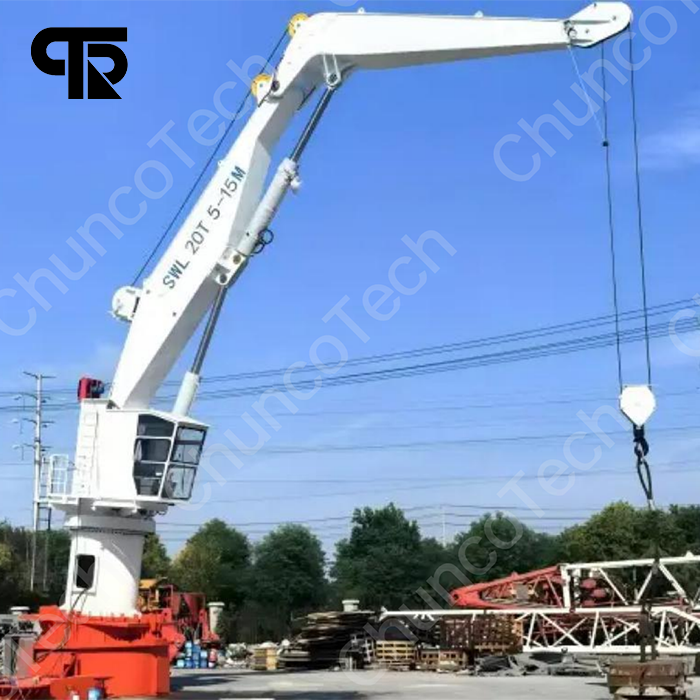 Portal Slewing Crane